
Custom glass wine rooms in Minnesota
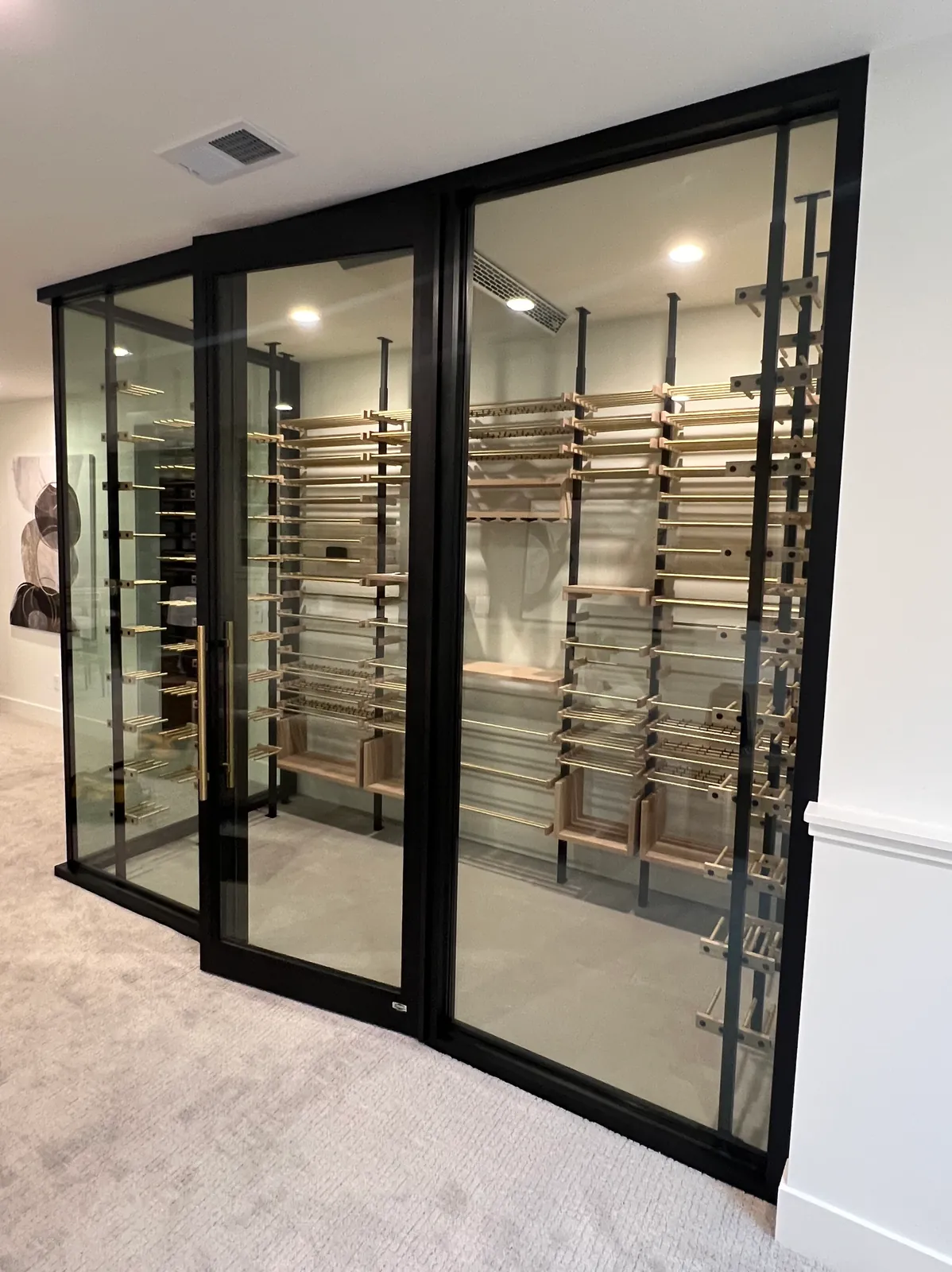
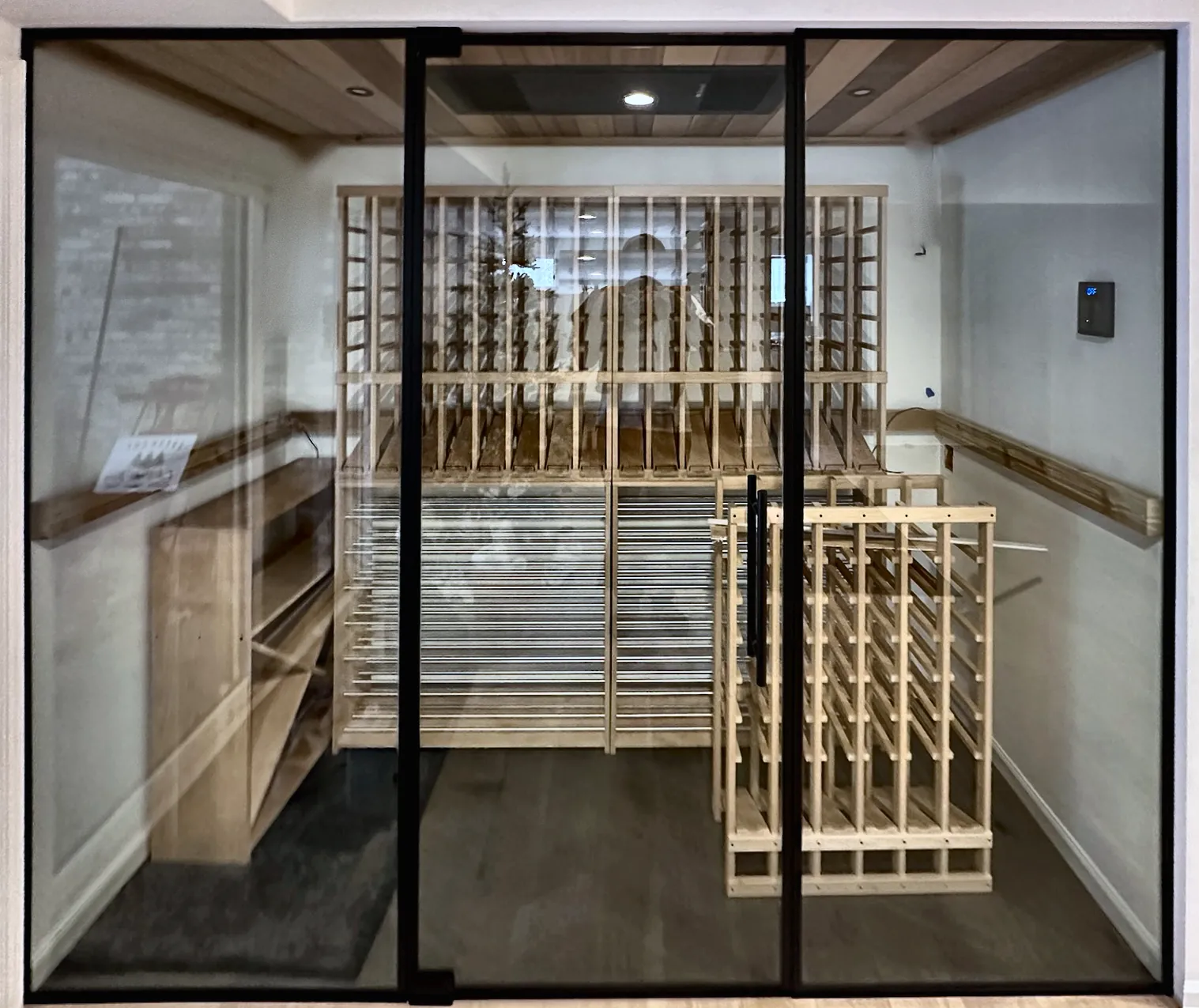
Insulated, coated glass walls and doors, floor to ceiling, built to the room you have. We spec the glass, order the door and frame to match, and our own crew installs them. Your cooling contractor handles the climate system, and we work with them so the glass and the cooling are sized for each other.
What we build
- Glass walls: floor to ceiling, sized to the room and to what can get down the stairs and through the doors
- Glass doors: hinged or pivot
- Frames: framed storefront for insulated glass, or semi-frameless channels for a lighter look, in clear, dark bronze, black or champagne anodized, or a custom painted finish
- Door hardware: pulls, hinges and locks in brass, bronze, nickel, chrome, stainless or black, satin or polished, plus painted finishes
- Door sweep and threshold: optional, depending on the look you want
- Measure, ordering and install: one shop from start to finish
What we don't
- Cooling and humidity control: a wine cooling or HVAC contractor
- Racking: a racking builder or your cabinetmaker
- Solid walls, insulation and vapor barrier: your builder
- Lighting and electrical: your electrician
The glass
| Construction | 1" insulated unit: two 1/4" lites with a 1/2" space between |
| Coating | Low-E, such as Guardian SunGuard SN68 or Vitro Solarban 60 or 70 |
| Gas fill | Argon standard, air fill available |
| Safety glazing | Tempered or laminated |
| Insulating value | Up to about R-4, compared with about R-1 for single-pane glass. It depends on the coating, gas fill and spacer. |
| UV protection | About 70% to 94% blocked, depending on the coating. Laminated glass blocks about 99%. |
| Estimates | Free, including the measure |
Why the glass matters in Minnesota
A wine room is kept around 55°F. On a humid summer day the basement air outside it can hold enough moisture to condense on any surface colder than about 60°F. Single-pane glass takes on the cellar's temperature, so its outside face drops below that point and fogs. An insulated unit slows the heat moving through the glass, which keeps the outside face closer to room temperature and makes fogging much less likely.
A low-E coating cuts the infrared heat that moves through the glass, so the cooling unit runs less, and it filters the UV light that ages wine on the shelf.
From framing to the first bottle
The glass comes in late, after everything around it is built. Bring us in early anyway, so the openings are framed for it.
Plan at framing
We go over the openings, the threshold and the door swing with you or your builder while the walls are still open, including blocking in the walls and ceiling to anchor the frame.
Measure the finished opening
We measure once the floor and walls are finished, before the racking goes in.
Order the door and frame
Typically 6 to 8 weeks for standard finishes after shop drawings are approved, or 12 weeks or more for painted finishes. You get a date up front.
Install & hand off
As quick as one day on site, depending on the size. Then your cooling contractor starts up the system.
What a glass wine room costs
Every wine room we build is custom, so the price covers a wide range. A single glass door into a framed opening can be several thousand dollars. A full floor-to-ceiling glass front with a door can run into the tens of thousands. The measure and estimate are free, so you get a real number for your room.
What moves the price:
- Glass area: one front wall vs. a room glassed on two or three sides
- The door: size, hinged or pivot, and the hardware and its finish
- Frame finish: standard anodized colors or a custom paint
- The glass: coating, gas fill, laminated or tempered
- Access: stairs, tight turns and how the panels get to the basement
For builders and designers
We'll price from plans, hold a slot at framing and measure when the room is ready. You get one shop for the glass, the door and the hardware, and one date that holds.
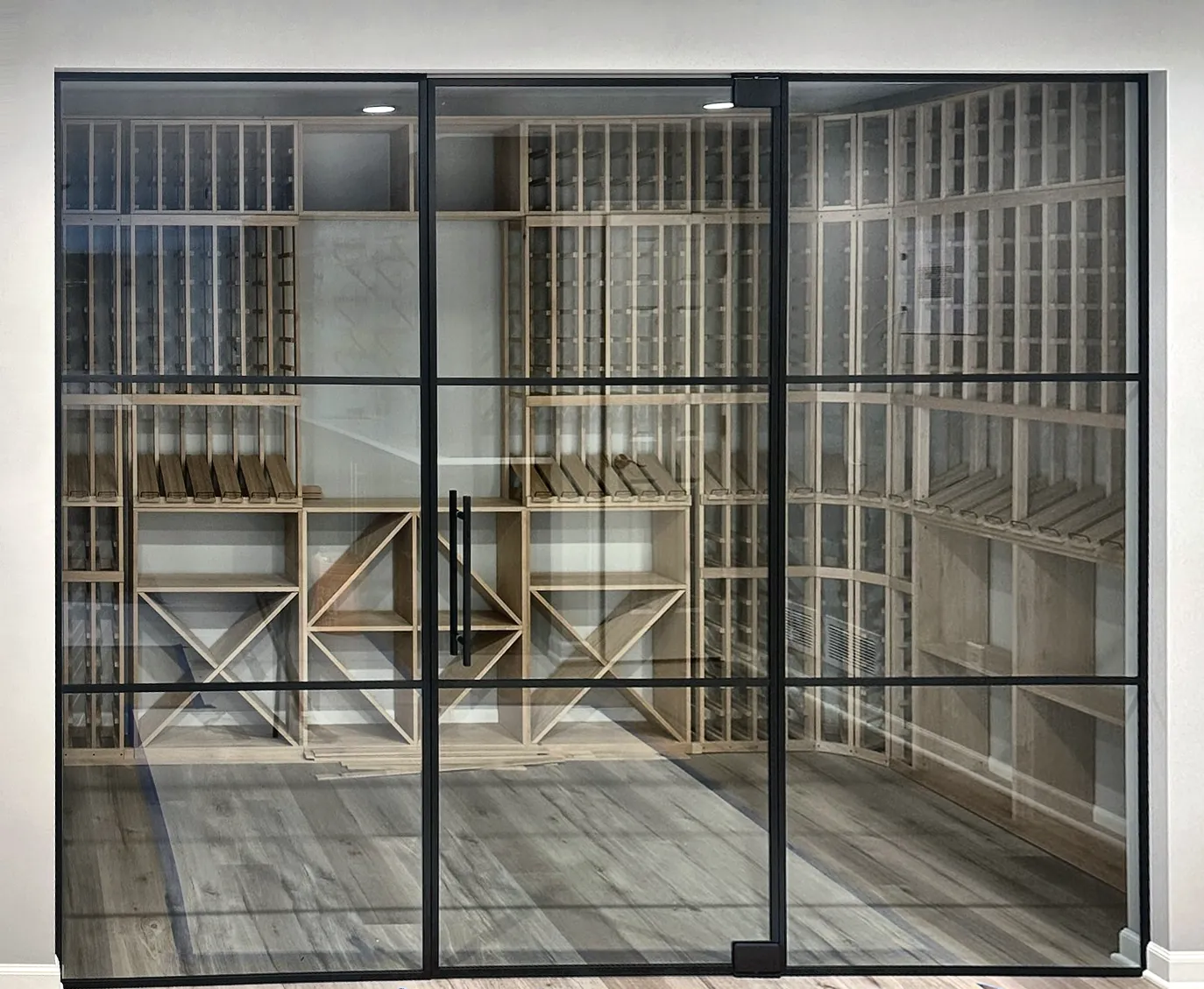
Our Hopkins wine room was built with Zehnder Homes.
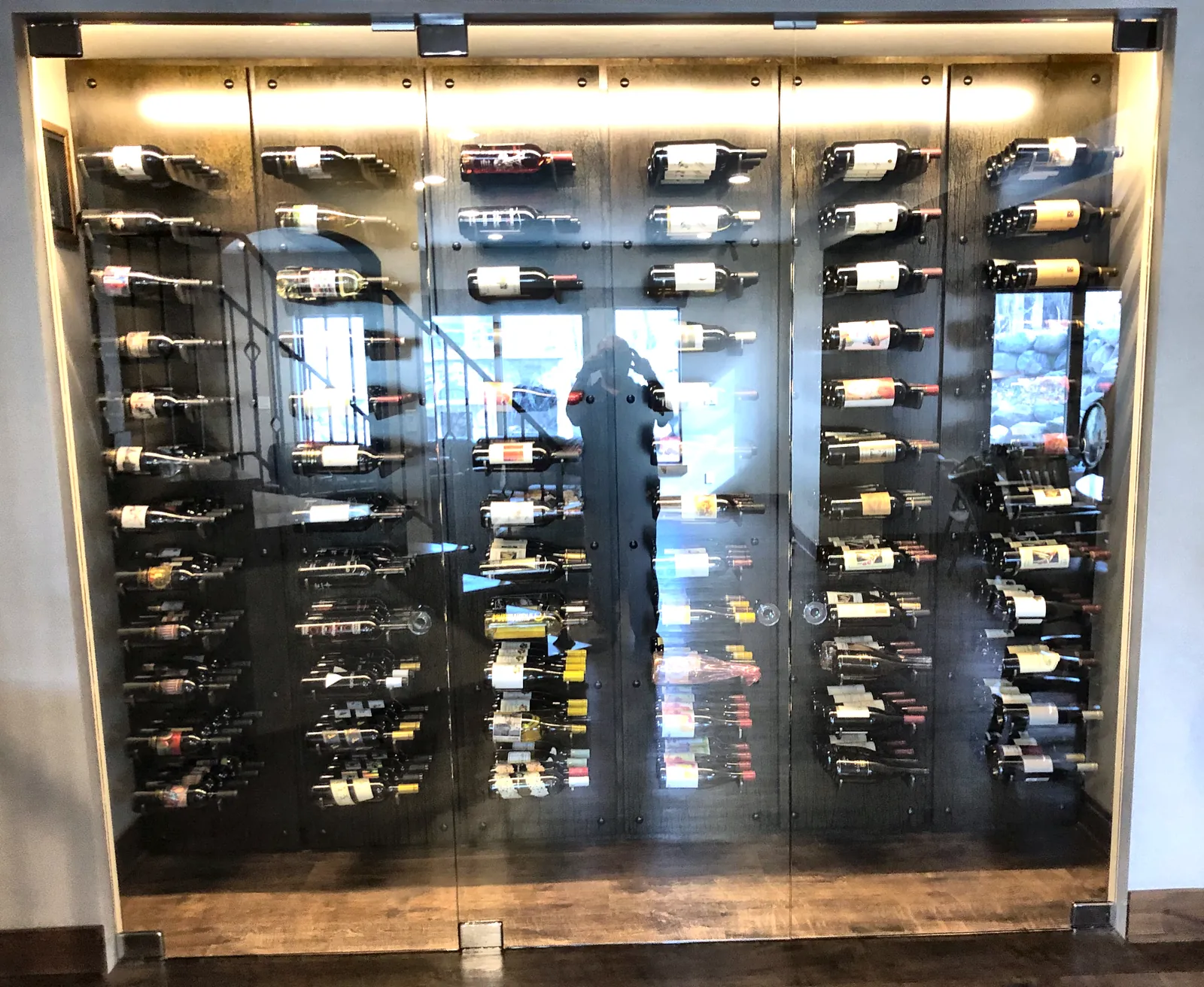
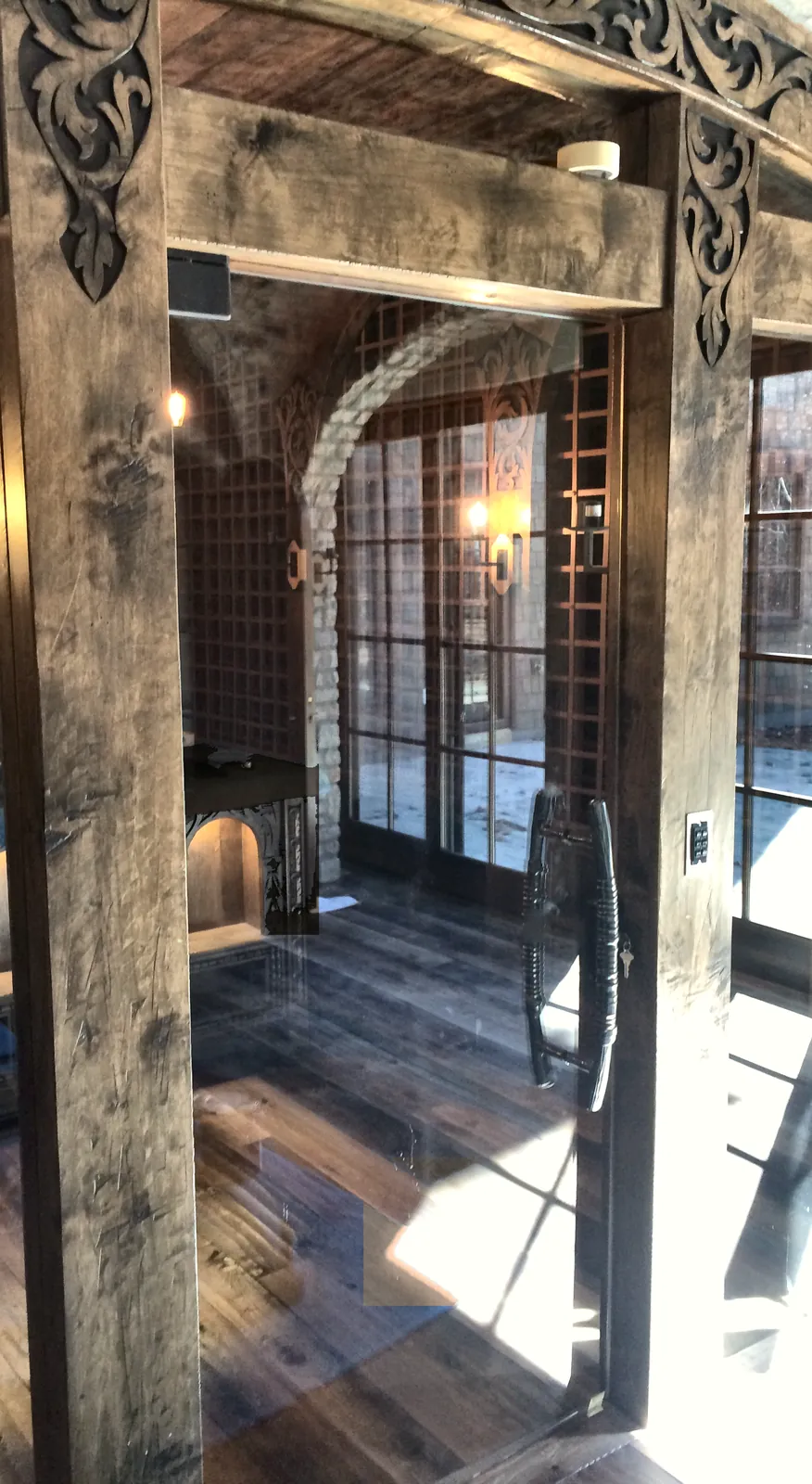
Wine rooms we've built
Common questions
Do you install the cooling system?
No. We build the glass walls, the door and the hardware. A wine cooling or HVAC contractor installs the cooling system. We give them the glass area and spec so the unit is sized for a glass room, and we line up our schedule with theirs.
Will the glass fog up?
Insulated glass makes it much less likely. Fogging happens when the face of the glass drops below the dew point of the air touching it. Insulated glass slows the heat moving through it, which keeps the outside face closer to room temperature. Single-pane glass on a chilled room is the usual cause of a fogged wine room.
How much does it cost?
It ranges widely: a single glass door can be several thousand dollars, and a full floor-to-ceiling glass front can run into the tens of thousands. The measure and estimate are free. Call 952-224-9030.
How long does it take?
Doors and frames in standard finishes typically arrive 6 to 8 weeks after shop drawings are approved; painted finishes take 12 weeks or more. Install can be as quick as one day.
Framed or frameless?
We recommend framed. A framed system holds a 1-inch insulated unit, which insulates better and resists fogging. Semi-frameless uses single-pane glass in channels at the top, bottom and sides for a lighter look, but it doesn't insulate as well.
Can you put glass on a wine room that's already built?
Sometimes. It depends on the existing opening and framing, so we look at each one. Send us a few photos and the dimensions, or give us a call.
Where do you build?
Across the Twin Cities metro from our Burnsville shop, and larger projects elsewhere in Minnesota. See our service area.
Planning a wine room?
Call while the walls are still open. A few minutes at framing saves a remake later.